The Balkans renewable growth grid reality is becoming impossible to ignore
08 June, 2026
The Balkans renewable growth grid reality is emerging as one of the defining challenges of the region’s energy transition.
Across Southeast Europe, renewable investment continues to accelerate, supported by strong investor appetite, falling technology costs and ambitious decarbonisation goals. Yet behind this growth, a growing mismatch is becoming visible: electricity grids were never designed for the scale and operational behaviour of the renewable systems now being deployed.
As renewable penetration rises, grid readiness is becoming just as important as generation capacity itself.
Renewable deployment is outpacing grid modernization
Most electricity systems across Southeast Europe were built around large centralized thermal generation assets.
Coal, hydro and gas plants provided predictable output, stable inertia and relatively straightforward balancing dynamics. Renewable systems behave differently.
As solar and wind penetration increases, electricity systems are experiencing:
- increasing congestion
- greater balancing complexity
- curtailment risk
- voltage instability
- price volatility
- declining system inertia
These challenges are no longer theoretical. Several markets across Southeast Europe are already experiencing periods where renewable generation exceeds the ability of local grids to absorb it efficiently.
Battery storage is becoming essential infrastructure
One of the clearest conclusions emerging across the sector is that future renewable growth will require significant investment in flexibility infrastructure.
Battery storage is increasingly central to that solution.
While storage was initially viewed primarily as a trading tool, its role is expanding rapidly. Storage systems are now expected to support balancing, congestion management, frequency stability, reserve markets and renewable integration simultaneously.
This represents a significant shift.
Storage is no longer simply an enhancement for renewable projects. It is increasingly becoming infrastructure required for electricity systems to operate reliably.
Hybrid projects are reshaping renewable development
The Balkans renewable growth grid reality is also accelerating the adoption of hybrid renewable projects.
Co-located storage allows developers to:
- maximise grid connection usage
- smooth renewable output
- reduce curtailment exposure
- improve capture prices
- participate more effectively across electricity markets
As renewable penetration rises, standalone solar and wind projects face increasing exposure to cannibalisation effects and negative pricing periods.
Hybridisation is becoming an important mechanism for preserving long-term project economics.
Operational intelligence is becoming a competitive advantage
The next phase of the energy transition will be more operationally demanding than the first.
Adding renewable capacity was only the beginning. Managing increasingly dynamic electricity systems in real time is becoming the next challenge.
Future competitiveness will increasingly depend on:
- advanced forecasting
- market optimisation
- balancing capability
- digital grid management
- storage integration
- software-driven dispatch systems
Success will depend not only on building infrastructure, but also on understanding how renewable-based electricity systems behave operationally.
Grid modernization will be a central topic at Energy Week Western Balkans 2026
As renewable deployment accelerates and electricity systems become increasingly complex, the relationship between renewable growth, storage deployment and grid modernization is becoming a critical issue for the region.
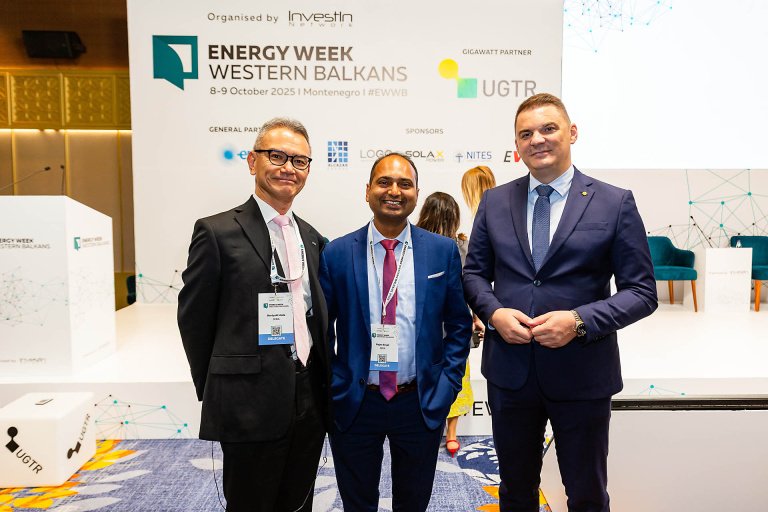
These topics will be explored in depth at Energy Week Western Balkans 2026, taking place on 7–8 October 2026 in Montenegro, where policymakers, utilities, investors, developers and technology providers will discuss the practical challenges shaping the next phase of the energy transition.
From battery storage and grid modernization to system flexibility and regional market integration, the event will provide a platform for examining how Southeast Europe can build electricity systems capable of supporting continued renewable growth.
The opportunity remains significant
Despite these challenges, the long-term opportunity remains substantial.
The Balkans possess some of Europe’s strongest solar, wind and hydro flexibility resources, while also benefiting from a strategic position between Southeast and Central European electricity markets.
If grid modernization, storage deployment and regional coordination continue to advance, the region could evolve into one of Europe’s most important renewable and flexibility corridors.
The challenge is no longer simply building renewable energy.
It is building electricity systems capable of supporting its long-term success.
Related News


