Financing the Western Balkans Energy Transition Requires Structure, Not Speed
23 March, 2026
Financing the Western Balkans energy transition is no longer about speed or scale alone. Capital is available, but it is increasingly selective.
Investors are no longer chasing volume or headline capacity. They are prioritising structure, risk clarity and execution capability.
This shift has direct implications for the region. Renewable deployment alone is no longer sufficient to attract long-term capital. Projects must demonstrate grid compatibility, revenue resilience and regulatory stability.
Regional investment frameworks and regulatory alignment are being supported through initiatives led by the Energy Community.
Why financing the Western Balkans energy transition depends on system design
As markets evolve, financing the Western Balkans energy transition increasingly depends on how well projects are integrated into the broader energy system.
Storage, hybrid assets and well-structured offtake agreements are becoming essential components of bankable projects.
Rather than focusing only on installed capacity, investors are evaluating:
- system integration
- revenue predictability
- exposure to market volatility
- long-term regulatory stability
According to energy market analysis from the European Commission, projects that combine contracted revenues with flexibility and optimisation capabilities are more resilient in volatile markets.
Market volatility is reshaping investment strategies
Volatile electricity markets have accelerated this shift toward disciplined investment structures.
Merchant exposure without flexibility is increasingly difficult to finance. Projects that rely solely on market prices face higher risk and lower investor confidence.
Conversely, portfolios that combine:
- long-term contracted revenues
- system services (such as balancing and flexibility)
- optimisation strategies are gaining traction among investors and lenders.
This reflects a broader transition from volume-driven deployment to system-oriented investment strategies.
From subsidies to structural de-risking
For policymakers and developers, the implications are clear.
De-risking is no longer achieved through subsidies alone. Instead, it depends on coherent system design and regulatory clarity.
This includes:
- stable regulatory frameworks
- transparent market rules
- integration of storage and flexibility
- alignment between infrastructure and generation
Financing follows clarity, not ambition.
A key discussion for the regional energy sector
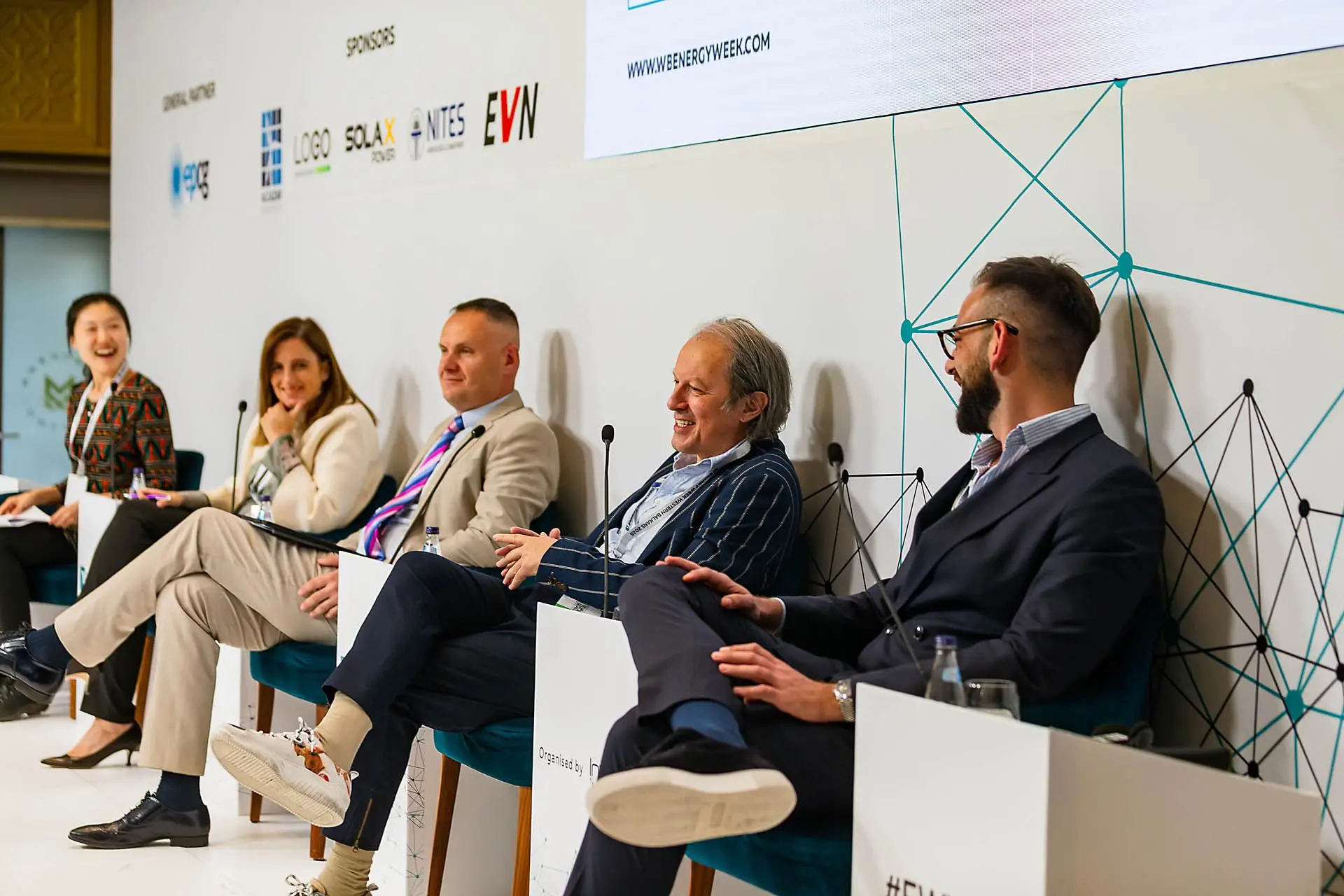
Energy Week Western Balkans provides a platform to address these challenges directly.
By bringing together developers, financiers, regulators and system operators, the event focuses on how capital, infrastructure and policy can align around delivery rather than declarations.
As the region moves forward, financing the Western Balkans energy transition will increasingly depend on the ability to build integrated, resilient and bankable energy systems.
Related News


